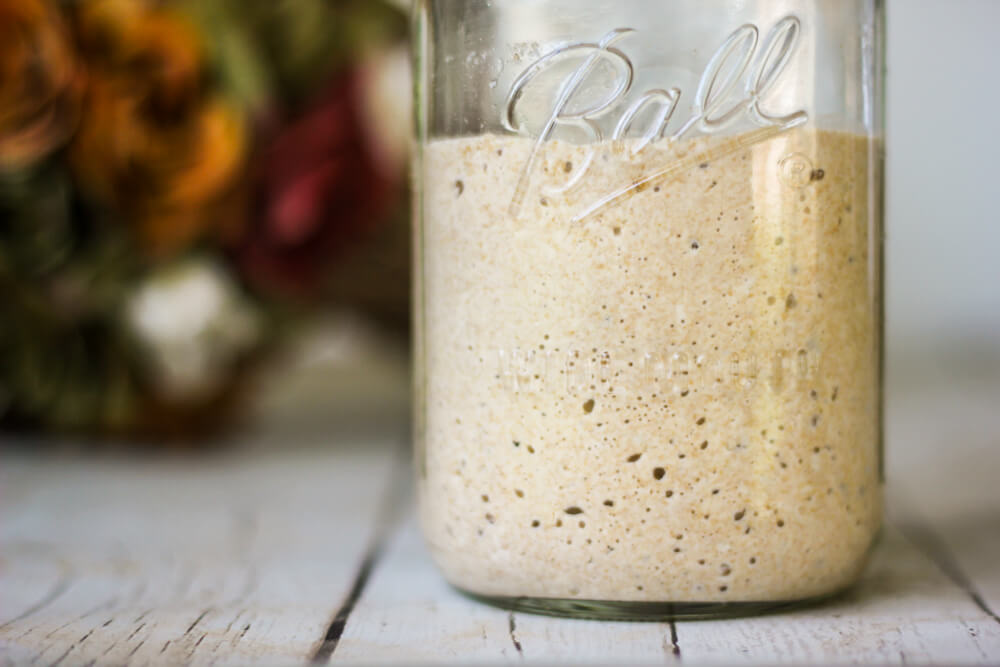
For the stater
- 200g organic rye flour
- 200ml water (boiled and cooled)
- A pickling jar or other container which you can seal tight
- Mix the flour and water and pour into your jar
- Leave the jar under an open window for 5 days. Or you can leave your jar outside, but make sure to cover with a sieve
- On day 5 add the same amount of flour and water again, stir well and close the lid tight
- On Day 7 mark on the outside of the jar the level of the mixture
- Remove about half and top up with flour and water to the mark you made earlier. Repeat this every couple of days until you can see definite bubbles the whole way through
- If at any stage there is a layer of dark liquid floating on top, just pour it off, add a spoonful of flour and stir
- Your sourdough starter is now ready to go, and the flavour will intensify with age
- Keep your starter alive by feeding it more organic rye flour every couple of days (replacing some of the contents in the jar)
- If you plan to bake bread only once a week, you can keep it in the fridge, bringing it out, feeding it and let it warm up for a day before needed
For the bread
- 375g strong white flour
- 250g sourdough starter
- 150-200ml water
- 20mls olive oil
- Tsp Salt
- If you have a food processor with a dough-hook, put the flour, starter, water and oil in the bowl and knead on medium for 5 minutes
- If not, then mix the flour, starter, water and oil in a bowl until well combined then tip the mix onto a floured surface and knead for 5 minutes
- For both kneading methods: add the salt, knead for another minute to mix, leave for 10 minutes and then knead for another 5 minutes
- Put the dough in a lightly oiled bowl until it has doubled in size about 2-5 hours
- Take the dough out and roll it on a work surface to get rid of the air bubbles and clean the bowl
- Prepare a proving basket if you have one
- If not, cut a square of baking paper and scrunch it up really well
- Flatten the paper out, lightly moisten it and cover in course cornmeal/course rice flour
- Use the floured paper to line the bowl and put the dough in and cover with cling-film
- Leave the dough to rise for about 12 hours/overnight/until it has doubled in size
- Gently tip the dough onto a lined baking tray, cut a slash across the top and bake for 30ish minutes at 220c until it has just passed golden
- For a thicker crust place a pan of boiling water in the bottom of the oven while baking
- If you prefer to use a Dutch oven, preheat the dish and lid along with the oven at 230C. When ready take the Dutch Oven out and quickly but gently cover the risen dough with a sheet of baking paper. Hold it all together and flip it upside down, remove the bowl/proving basket. Transfer the dough with the baking paper underneath into the Dutch oven and put the lid on and return to the oven for 30 minutes. After 30 minutes place a tray of boiling water in the bottom of the oven and remove the lid. To help avoid drops and burns, you can practice this whole step wearing heavy oven mitts
- Remove the bread form the Dutch oven and leave to cool on a cooling rack for at least 30 minutes
 Grub and Grubs