Difficulty Easy to medium. A bit of physical effort is involved in digging
Where Sunny, sheltered (if growing tall maincrops)
Soil heavy/light, fertile, any PH but prefers slightly acidic
When From March
Preparation On the first of March dig trenches 30cm deep and 30cm wide, 60cm apart in the ground or in raised beds. If planting earlies or seconds, put 6 seed potatoes in an egg box ensuring the side with the most eyes is pointing upwards. Leave in a north facing windowsill and they will sprout (Chit). There is no need to chit maincrop potatoes
Planting On 17th March (St. Patrick’s Day) place one of the potatoes in the trench every 30cm and cover with 10cm of soil.
Earlies, Second Earlies and Maincrops are all planted at the same time. If you are planting potatoes for Christmas, use Early varieties and chit on the last weekend of July and plant out on the 3rd weekend of August
Care After a week or 2, weather dependent, the plants will appear above ground. When the plants are 20cm tall fill the trench again with another 10cm layer of soil mixed with a handful of Growmore for every metre so that only the top 10cm of the plant is visible. Keep repeating this filling-in every couple of weeks until the trenches are completely filled in and are mounds 30cm tall/until you run out of soil. Remove any flower which develop and throw in the bin as soon as possible as they are poisonous, especially to cats, dogs and children. If any of the plants wilt and die off from late frosts, they will recover on their own, with harvesting delayed by a week or two
Feeding While filling in/ piling up mix in a handful of Growmore for each metre to promote green growth above. Once the mounds are 30cm high change to a fortnightly feed of potash or tomato feed to promote tuber growth
Harvest Earlies will be ready around mid June, Second Earlies around late July and Maincrops from mid August, when the foliage starts to die back. Stick your hand into the ground and pull a potato out to test. To harvest an entire plant gently stick a garden fork into the ground 30cm away from the plant and lever the soil up. Go through the soil with your hands to find any smaller tubers. Leave the potatoes out in the sun for a couple of hours to dry out and form a skin. Maincrops can be left in the ground for a month after the foliage dies back
Storage Earlies and Second Earlies don’t store well and should be eaten within a couple of days of harvest. Maincrops can be left in the ground until needed
Saving Seed You can keep a few of the medium sized, healthy looking potatoes for planting next year. Without washing them, put into a dark paper sack with sawdust and store them in a cool, dry, dark place until next spring. If you have any scab, rust or blight on this year’s crop, don’t save any seed potatoes, buy certified disease-free varieties from a good supplier
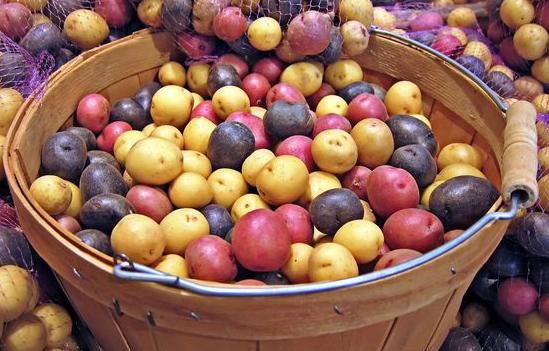
Varieties Swifts are the earliest of the earliest and taste good. Kestrels are a good Second Early growing to a reasonable size quickly, have a beautiful texture and flavour and nice looking purple markings. Setanta are a good Maincrop variety, they grow really big and have a really good flavour, pink skins and a creamy yellow flesh. Arran Victors are bright purple with a bright white flesh and a great flavour
Growing in Containers If you search online for how to grow potatoes there are hundreds of different methods from growing inside stacks of tyres, in towers made from pallets, in supermarket bags-for-life, all promising to yield monster crops. Unfortunately none of them work as advertised. The biggest obstacles each of the “new and improved” methods face are temperature and water. Potatoes like heat and sun on their leaves but need the soil to be cool – if planted in any sort of stack, especially tyres the soil heats up too much limiting tuber growth.
However, If you don’t have space to have raised beds or to dig trenches some sort of crop is possible from potato grow bags. Put a 10cm layer of compost with a small handful of fish, blood and bone on the bottom, add 2 potatoes maximum, then another 10cm layer of compost. Fill with compost again until only the top 10cm of the plants are above ground until the container is full. Make sure that the soil never dries out or the tubers will stop growing permanently. A good watering once a week will be enough. If there is any danger of frosts, move the grow bags to a sheltered position against a wall
Whichever way you decide to plant them, in the ground or in containers, don’t be tempted to plant more seed potatoes than advised as you will only end up with a lot more smaller potatoes
Pests Slugs are a constant worry and can be treated with nematodes. the risk of scab can be reduced somewhat by only using certified seed potatoes, but if your garden has ever had scab, it’ll be difficult to avoid in following years. There is no remedy for blight apart from growing blight-resistant varieties
 Grub and Grubs